Fire-ban-day camping meals: a no-cook family menu for SA parks
Last checked: 29 Oct 2026 (Adelaide time). Rules, fees and fire restrictions change — use the official links on this page before you book or go.
Disclosure: This site may earn a small commission in future if you buy through some links. Right now there are no affiliate links on this page, and nobody pays to be mentioned.
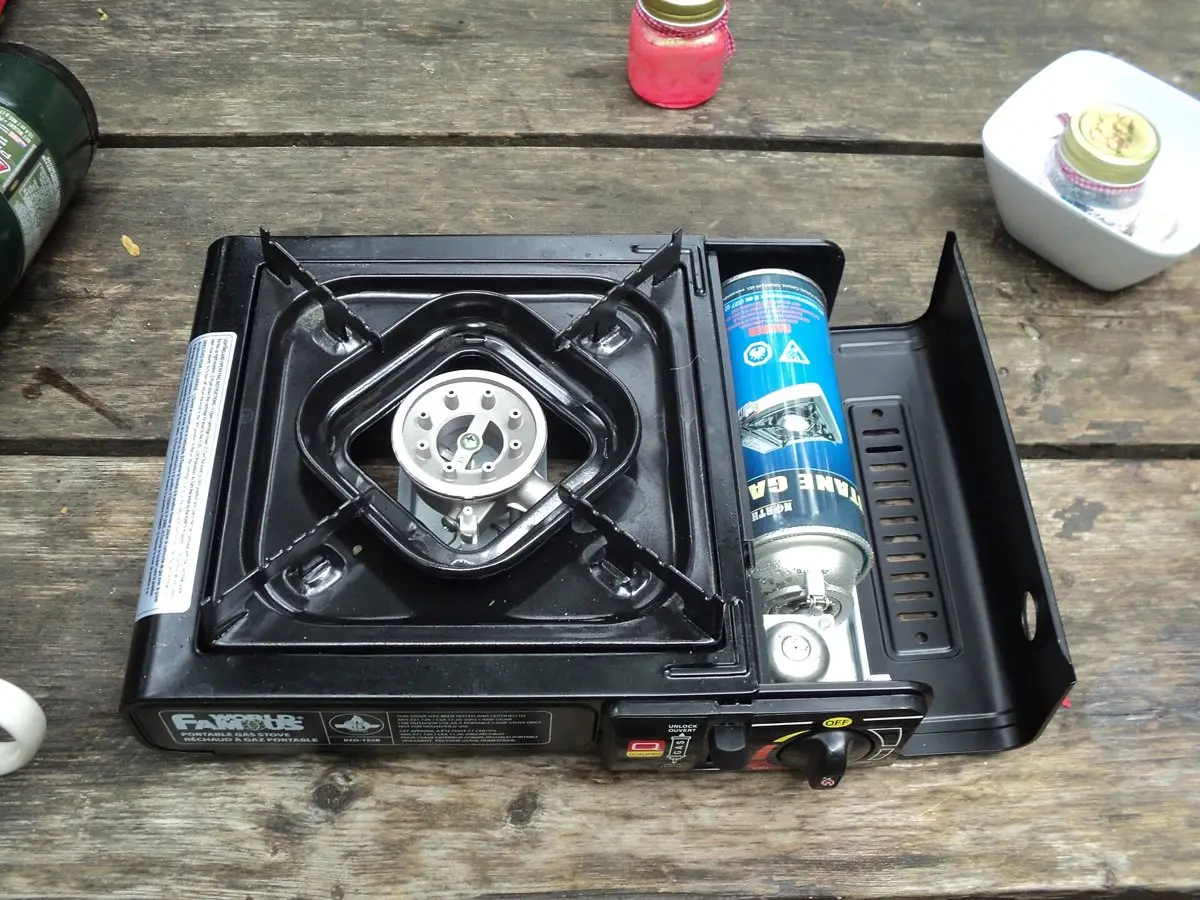
A lot of general camping advice gets one thing wrong for South Australia: on a Total Fire Ban day, your gas camp stove is banned in SA national parks too, not just the campfire. If you’ve packed sausages and a two-burner for dinner, you could end up feeding hungry kids crackers in the car.
This page covers what the rules actually say, how to check, and a no-cook menu kids will eat.
Read this first:
- Every rule below was checked against official CFS and National Parks and Wildlife Service SA pages on 29 Oct 2026 (Adelaide time). Rules and dates change, so click through before you go.
- This is general information, not legal advice. If you’re unsure, call the CFS Information Hotline on 1800 362 361.
Why this matters right now
- Fire Danger Season 2026/27 starts 1 November 2026 in the Riverland, Murraylands, Mid North, Yorke Peninsula, Upper South East and Lower South East districts, and started 15 October 2026 in Flinders, the West Coast, Eastern Eyre Peninsula and the Pastoral districts. Adelaide Metropolitan, Mount Lofty Ranges and Kangaroo Island were still “TBA”. Last season, Adelaide Metropolitan and Mount Lofty Ranges started on 1 December 2025 (CFS Fire Danger Season dates, checked 29 Oct 2026).
- A Total Fire Ban “starts at midnight and stays in place for 24 hours however can also be declared on the morning of a day if actual weather forecasts differ from predicted weather” (CFS Total Fire Bans & Ratings, checked 29 Oct 2026).
- People genuinely aren’t sure. In an April 2026 Reddit thread about cooking during a burn ban, some assumed a stove is always fine. In SA parks, it isn’t.
The rules in plain English (checked 29 Oct 2026)
In SA national parks and conservation parks
- Total Fire Ban day: “All open fires, liquid fuel and gas stoves are banned in all parks on Total Fire Ban days… Parks may be closed to visitors on Total Fire Ban days.” (CFS, Fire on Government Reserves)
- The exception: NPWS says “some parks with fixed barbecue facilities do still allow them to be used on Total Fire Ban days, as long as the park has not been closed” (NPWS Campfires and BBQs). For example, at Belair National Park: “Designated fixed gas barbeques may be used on days of total fire ban other than when the park has been formally closed. Refer to site office for information.” (NPWS Park Fire Restrictions 2026–27, PDF). Don’t assume it applies everywhere: Para Wirra’s page says that on some Total Fire Ban days the park may stay open but “the use of all barbecues is prohibited”.
- No firewood collecting. Collecting firewood in national parks is prohibited, so bring your own when fires are allowed.
Family parks near Adelaide: 2026–27 fire rules
From the official NPWS Park Fire Restrictions 2026–2027 table (checked 29 Oct 2026):
| Park | Wood/solid fuel fires | Gas/liquid fuel (your stove) | Notes |
|---|---|---|---|
| Onkaparinga River NP (Pink Gum) | Prohibited 1 Dec 2026 to 24 Mar 2027 | Designated areas only, not on Total Fire Ban days | Wood fires for cooking only, in designated rings at booked campsites |
| Para Wirra CP | Prohibited 1 Dec 2026 to 24 Mar 2027 | Designated areas only, not on Total Fire Ban days | Same campsite fire-ring rule |
| Deep Creek NP | Prohibited 1 Dec 2026 to 24 Mar 2027 | Permitted, not on Total Fire Ban days | |
| Newland Head CP (Waitpinga) | Prohibited all year | Designated areas only, not on Total Fire Ban days | No wood fires at all |
| Belair NP | Prohibited all year | Designated areas only, not on Total Fire Ban days | Fixed gas BBQs usable on Total Fire Ban days unless the park is formally closed |
| Murray River NP (Riverland) | Prohibited 1 Nov 2026 to 24 Mar 2027 | Permitted, not on Total Fire Ban days | Paringa Paddock: wood fires prohibited all year |
| Mount Remarkable NP | Prohibited all year (with exceptions) | Permitted, not on Total Fire Ban days | Mambray Creek and Baroota campgrounds: fire pits allowed except 16 Oct 2026 to 24 Mar 2027 and on Total Fire Ban days |
The takeaway: from December to late March, plan on no campfire at the parks closest to Adelaide, and on a Total Fire Ban day plan on no stove either.
ForestrySA forests (Kuitpo, Mount Crawford)
- ForestrySA says: “1 December – 31 March: All fires are prohibited. This includes wood, gas and any solid fuels… including smokers, hibachi grills and camp stoves.” Gas BBQs and fuel stoves are permitted 1 April – 30 November, and “The forest is closed to the public on declared Total Fire Ban days” (ForestrySA, checked 29 Oct 2026).
- CFS pages word the forest dates differently, so treat ForestrySA’s own page as the one to follow and check it before you go.
Caravan parks and private campgrounds
- CFS says that on a Total Fire Ban day a gas or electric barbecue may be used under conditions, including being within 15 metres of a domestic or commercial premises (or on a coastal foreshore), clear of flammable material, with someone in control and water or an extinguisher at hand. It also says “Some local councils allow gas or electric barbecues in caravan parks or cleared picnic areas. Look for signs or contact the council for advice.” (CFS What can I do?, checked 29 Oct 2026)
- Whether your site counts is a question for the park office. Ask when you book rather than assume.
- Wood, charcoal and heat-bead fires need a Schedule 10 permit on Total Fire Ban days, and CFS says these “are intended for emergency use only”.
How to check
- Fire Danger Ratings for the next day “are published between 4:30-5:00pm” Adelaide time, and days 2 to 4 are “preliminary forecasts” (CFS, checked 29 Oct 2026).
- Know your Fire Ban District. The parks in the table above near Adelaide are in Mount Lofty Ranges. The CFS map lets you look up any address.
- Use the CFS website, the Alert SA app, or the CFS Information Hotline 1800 362 361.
- A simple habit: check at 5pm two days out and again at 5pm the night before. If a ban appears, switch to the menu below or decide whether to go at all.
The no-cook family menu (one night, two days)
Food-safety basics from SA Health (Picnics, camping and food safety):
- Keep cold food at or below 5°C with freezer blocks, frozen drinks or a car fridge.
- Chill or freeze food the day before so it goes into the esky cold.
- Keep the esky shaded with the lid shut. A second esky just for drinks helps, because it’s opened most.
- Don’t eat chilled food that’s been left out of the esky for more than two hours.
Food Standards Australia New Zealand also suggests keeping potentially hazardous foods to a minimum when camping unless you can keep them at 5°C or colder, and leaning on shelf-stable foods (FSANZ, Camping). On a very hot ban day, that’s good advice.
Arrival lunch (eat it first, while it’s coldest)
- Wraps made at home the night before: hard cheese, Vegemite, or tinned tuna.
- Carrot and cucumber sticks, apples and mandarins.
Dinner: build-your-own platter
- Cooked chicken from home, kept very cold and eaten that night (not day two).
- Crackers, hard cheese, cherry tomatoes, cucumber, hummus.
- Tinned bean or chickpea salad with a dressing.
- Dessert: fruit cups, or yoghurt pouches frozen at home so they double as ice bricks.
Something warm without a flame
- Fill an insulated food jar at home with hot soup, pasta or chilli just before you leave, and eat it within a few hours. Queensland Health’s general advice is that hot food not eaten within 4 hours should be thrown out (qld.gov.au, Eating outdoors).
Breakfast
- Overnight oats with long-life milk in screw-top jars.
- Cereal with long-life milk, bananas, muesli bars.
- Parents: iced coffee from the esky, or hot water in a vacuum flask filled at home.
Day-two lunch (the “esky is getting warm” meal)
- Shelf-stable only: tinned tuna or salmon, crackers, peanut butter (if no allergies in your group), dried fruit, whole fruit.
What to leave at home on a forecast ban day
- Raw sausages, mince or chicken, rice or pasta salads made days earlier, and anything you’d hate to throw out.
- Self-heating meal packs and chemical heaters: we couldn’t find an SA rule that clearly covers them in parks, so we’ve left them out. Ask NPWS or the CFS hotline if you’re considering them.
Packing list for a fire-ban weekend
- Two eskies (food and drinks) and extra freezer blocks.
- An insulated food jar and a vacuum flask.
- A shade shelter with at least one wall, broad-brim hats for everyone, and plenty of water. Ban days are hot days. For what it’s worth, on a hot camping day our family of four usually gets through about 10–12 litres for drinking, cooking and basic washing, and we always pack a bit extra. That’s just our experience, not official advice.
- Wet wipes, soap and hand sanitiser.
- A written note of your Fire Ban District and the CFS hotline number, in case phone coverage is patchy.
When to call it off
If a Total Fire Ban or an Extreme or Catastrophic rating is forecast where you’re camping, think hard about going. CFS describes Catastrophic as “For your survival leave bushfire risk areas” and Extreme as “Take action now to protect your life and property” (CFS). All national parks close on Catastrophic days. With young kids, a cool day at home and a rebooked weekend is usually the better call.
Our own rule, as a Brighton family with kids aged 6 and 8: we call a trip off if the CFS fire danger rating is Extreme or Catastrophic, or if it’s forecast over 40 °C with strong winds. Extreme is the hard stop for us. That’s our personal line, not official advice, so check the CFS rating and park closures for where you’re going.
Sources (checked 29 Oct 2026, Adelaide time)
- CFS, Fire Danger Season dates & permits
- CFS, What can I do?
- CFS, Total Fire Bans & Ratings
- NPWS SA, Campfires and BBQs
- NPWS, Park Fire Restrictions 2026–2027 (PDF)
- NPWS SA, Para Wirra Conservation Park
- ForestrySA, Fires, barbecues and wood collection
- SA Health, FSANZ and Queensland Health pages linked above (food safety; checked 27 Oct 2026)